
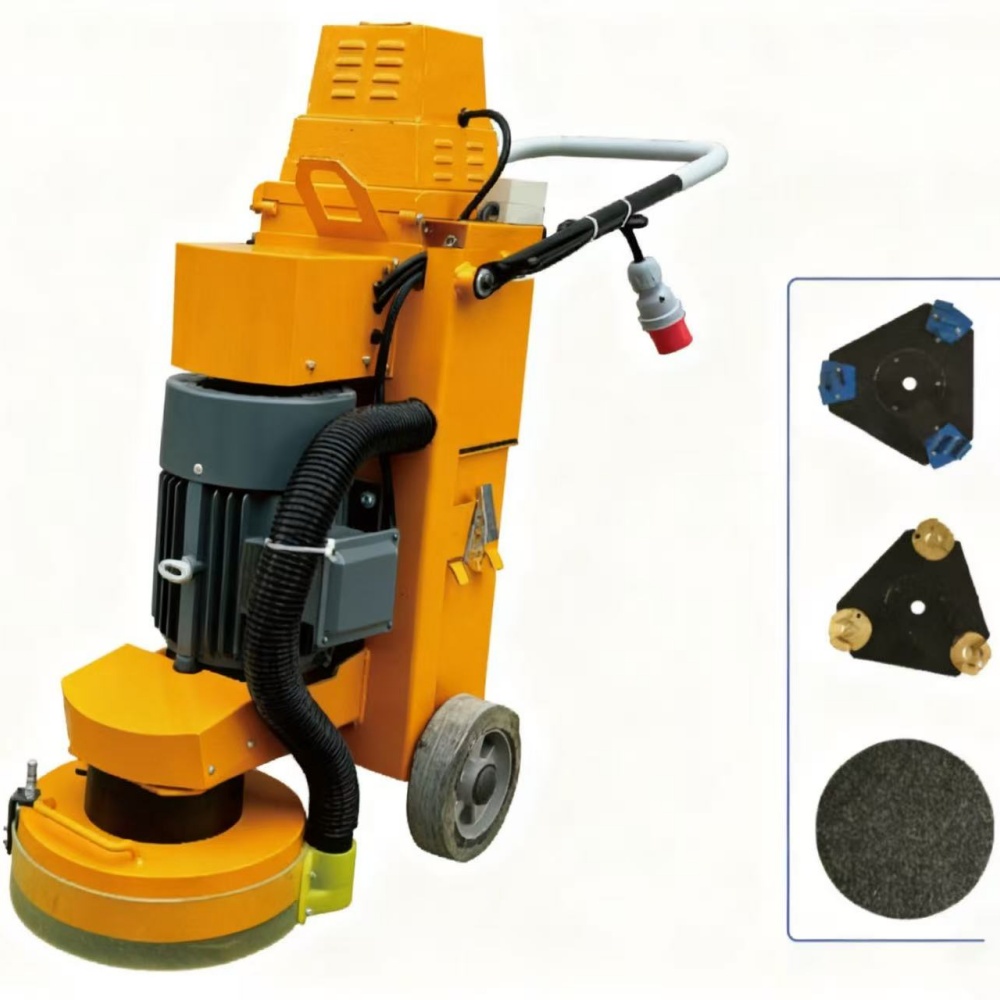
In construction decoration, floor construction and other scenarios, concrete grinders are core equipment for achieving ground leveling and polishing. However, their high-speed rotating abrasives, flying dust and complex mechanical structures can easily cause safety accidents such as mechanical injuries, dust poisoning and electric shocks if operated improperly. In accordance with the Requirements for the Use and Maintenance of Floor Grinders (T/FJDP 007-2023) and industry safety operation specifications, this article sorts out the full-process precautions to safeguard construction safety.
I. Pre-operation Preparation: Build the First Line of Defense for Safety
Non-negotiable Personnel Qualifications and Protection
Operators must pass professional training and assessment before taking up their posts; unlicensed operation, operation under the influence of alcohol or fatigued construction is strictly prohibited. Before operation, wear a full set of protective equipment: N95 or higher grade dust masks (to prevent silicosis caused by silica dust), splash-proof goggles, wear-resistant gloves, close-fitting work clothes (with cuffs tightened), non-slip steel-toe shoes. Long hair must be tucked into safety helmets, and wearing scarves, bracelets and other ornaments that can be drawn into the equipment is strictly forbidden. Conduct safety technical disclosure at the same time, clarify the grinding tasks, material characteristics (such as concrete hardness, surface precision requirements) and hazard prevention measures to ensure that operators fully master them.
Meticulous Equipment and Environment Inspection
Equipment inspection must follow the principle of “start only when there are no hidden dangers”: first, confirm that the machine body is firmly fixed, the anchor bolts are not loose, and the protective cover (coverage rate not less than 180°) and protective fence (height ≥1.2m) are intact; the grinding discs/grinding wheels must be free of cracks and gaps, the fit clearance between the aperture and the main shaft ≤0.1mm. After installation, a 2-minute no-load test must be carried out to ensure stable rotation without abnormal noise. For the electrical system, the power wiring is firmly grounded (grounding resistance ≤4Ω), the cable is free of damage and aging. For fuel-type equipment, keep away from fire sources, and refueling during operation is strictly prohibited. For environmental preparation, clear hard objects (bolts, nails, etc.) in the operation area, demarcate a warning zone with a radius of ≥1.5m, set up warning signs such as “Beware of Mechanical Injury” and “Watch for Dust”, and ensure good ventilation (dust emission concentration ≤2mg/m³) and sufficient lighting (illuminance of the work surface ≥300lux).
II. In-operation Operation: Standardize Processes to Avoid Risks
Gradual Startup and Parameter Debugging
Start the equipment in the order of “turn on the dust removal device first, then the grinding host”. Run it without load for 2-3 minutes, check that the braking system is sensitive (for grinding wheels with a diameter ≤300mm, stop time ≤1 minute), the abrasive rotation state and instrument readings are normal before conducting trial grinding. Parameter settings must match construction requirements: select grinding discs with appropriate mesh sizes according to concrete hardness (30 mesh for rough grinding, more than 120 mesh for fine grinding), strictly control the grinding wheel speed (overrating speed is strictly prohibited), feed speed (about 0.5-1m/s) and grinding pressure to avoid abrasive cracking or workpiece deformation caused by sudden pressurization.
Real-time Operation Monitoring and Operational Taboos
Hold the handle firmly with both hands during grinding, keep the machine body stable, and push forward at a constant speed along a straight line. Overlap the grinding marks by 1/3 for each round trip to avoid missing grinding or groove formation. Monitor the equipment status throughout the process: check the abrasive wear, workpiece clamping firmness and motor temperature (≤70℃) every 30 minutes. In case of abnormal noise, increased vibration or abnormal sparks, stop the machine immediately to troubleshoot faults. Adjusting components, cleaning debris or replacing grinding discs while the equipment is running is strictly prohibited. Extra caution is required for the treatment of special areas: use small hand-held grinders for auxiliary operation at edges and corners. Remove raised hard objects such as steel bars before construction to avoid damaging the equipment or causing splash risks. At the same time, non-operators must keep a safe distance of more than 3m, and it is strictly forbidden to stay in the tangential direction of the equipment rotation.
III. Post-operation Maintenance: Extend Service Life and Eliminate Hidden Dangers
Standardized Shutdown and Cleaning Processes
After the operation is completed, first retract the grinding head to a safe position, turn off the grinding host, and turn off the dust removal device and main power supply after the grinding disc stops rotating completely. When cleaning, use a brush or vacuum cleaner to remove dust on the equipment surface and in the gaps of the grinding discs; do not wipe the motor with a damp cloth to avoid short circuit. For fuel-type equipment, store the remaining fuel properly. Classify and store the workpieces and check their surface quality, and clean the operation area to ensure no dust accumulation or tool left.
Regular Maintenance and Component Replacement
For daily maintenance, fasten the bolts at each connection part and check whether the grinding disc screws are loose; stop the machine to cool down the equipment after every 30 minutes of operation, replace the lubricating grease of the main shaft bearing every 100 working hours, and overhaul the fan of the dust removal device and replace aging transmission components every 500 working hours. The grinding disc must be replaced when the wear amount exceeds 1/3 of the original diameter. Regularly check the insulation performance of electrical components, and store the equipment in a dry and ventilated place for long-term storage to prevent rust or aging of rubber components. Keep detailed records of all maintenance for easy traceability of equipment status.
Conclusion
The safe operation of concrete grinders is not only a guarantee for the life and health of operators, but also the key to improving construction quality and extending equipment service life. From careful inspection before operation, standardized operation during operation to systematic maintenance after operation, each link must strictly follow the requirements of industry standards and equipment instruction manuals. Only by integrating safety awareness into the whole process can risks be effectively avoided and concrete grinders exert their maximum value in construction scenarios.