In 2025, with the upgraded requirements for construction precision and environmental protection in industrial flooring, stone processing and other fields, the process selection of floor grinders has become a key factor affecting project quality. As two mainstream technical approaches, dry grinding and wet grinding show significant performance differences in practical applications. Combined with the latest industry cases and technical data, this article deeply disassembles the core differences and selection logic of the two for practitioners.
I. Process Essence: Medium Differences Determine Core Characteristics
The essence of floor grinding is to achieve surface treatment through the mechanical action of abrasives and the ground, and the core difference between dry grinding and wet grinding lies in the introduction of liquid medium or not:
- Dry Grinding Process: Relying on air as the grinding environment, it directly rubs against the ground with tools such as diamond grinding discs, and realizes material removal by virtue of mechanical shearing force. Its equipment is usually equipped with dust covers and vacuum dust removal systems. For example, the stirred media mill of Eirich Machines achieves high-efficiency grinding through high-speed operation of 300-1500rpm, with a single unit processing capacity of up to 5t/h.
- Wet Grinding Process: Using water or special coolant as the medium, it has the triple functions of lubrication, cooling and chip removal. The protective film formed by the liquid can reduce the wear of the grinding disc, and at the same time convert the grinding debris into slurry for discharge. Typical equipment such as the nano bead mill of Allwin-Grinding can achieve nano-level grinding precision with a particle size control accuracy of ±5nm.
II. Comprehensive Comparison of Key Performance Dimensions
- Construction Efficiency and Cost
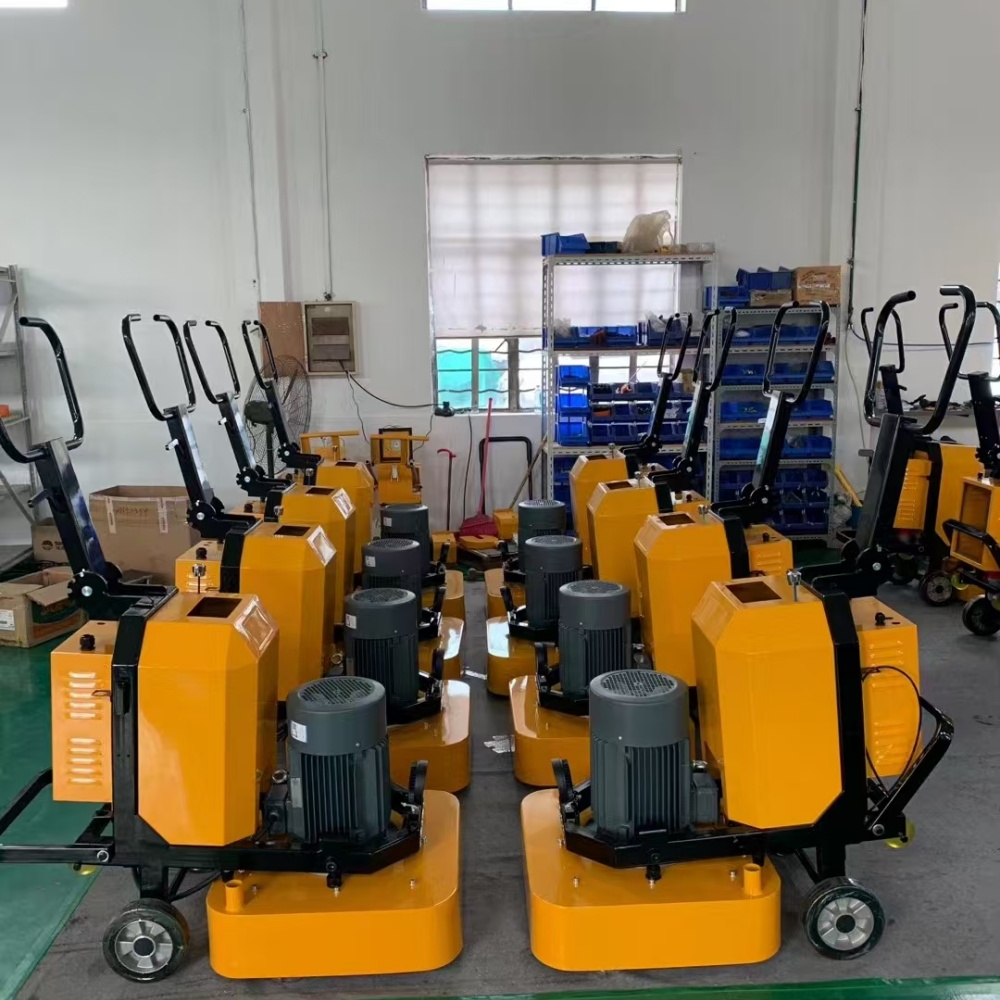
With the advantages of no need for water supply and convenient cleaning, dry grinding has outstanding efficiency in large-area rough grinding scenarios. For example, rough processing of factory flooring can save 30% of construction time. However, its grinding discs wear out quickly, need to be replaced frequently during high-mesh polishing, and the investment in dust removal equipment increases the comprehensive cost by 15%-20%. Although wet grinding has complex procedures (requiring water sprinkling, water collection and wastewater treatment), liquid lubrication extends the service life of grinding discs by 30%-50%. Especially in fine polishing above 1000 mesh, the consumable cost per unit area is 25% lower than that of dry grinding.
- Environmental and Safety Performance
The core pain point of dry grinding is dust pollution. When no professional dust removal equipment is equipped, the dust concentration in the working environment can reach more than 50mg/m³, far exceeding the environmental protection standard limit of 10mg/m³, which poses a threat to the respiratory system of construction workers. Wet grinding suppresses more than 90% of dust through liquid to achieve dust-free operation, but the slurry produced in each process requires professional treatment. Direct discharge is easy to cause water pollution, which is especially not suitable for floors above the second floor or areas with high waterproof requirements.
- Finished Product Quality and Applicable Scenarios
The high-temperature friction of dry grinding can improve the ground reflectivity, which is suitable for commercial flooring pursuing high-gloss effects, such as shopping malls and exhibition halls. Its grinding marks are clear, which is convenient for timely discovery of missed grinding areas. Relying on the advantage of uniform cutting, wet grinding can effectively seal the defects of sandstone and other ground surfaces, and the flatness error of the finished product can be controlled within ±0.3mm/2m, which is more suitable for industrial workshops and precision laboratories with strict flatness requirements, and the matte texture is convenient for daily maintenance.
In terms of material adaptability, dry grinding is more suitable for concrete floors, wood and other materials with a moisture content of less than 8%, while wet grinding performs better in stone processing and high-hardness concrete curing treatment. For example, in the reconstruction project of the crushing and grinding system of Yunliu Mining, the wet grinding process made the proportion of ore grinding fineness of -0.074mm reach 82%, meeting the requirements of subsequent flotation production.
III. 2025 Industry Practical Cases: Implementation of Selection Logic
A 3000㎡ electronic factory flooring project in Guangdong (completed in October 2025) adopted a combined process of “wet grinding for rough processing + dry grinding for fine polishing”: wet grinding was used to treat the ground base in the early stage, liquid cooling was used to avoid burning of high-hardness concrete, and dust pollution was reduced; dry grinding was used to improve the glossiness in the later stage. Finally, the ground reflectivity reached 75%, the flatness error was ≤0.2mm/2m, and the comprehensive cost was 18% lower than that of pure dry grinding.
In another case, the construction of a steel structure factory in a water-scarce area in the west chose the pure dry grinding process, equipped with a central dust removal system to control the dust concentration at 8mg/m³. By selecting high-temperature resistant alumina grinding discs, the wear rate of grinding discs was reduced by 30%. Although the consumable cost per square meter was 12% higher than that of wet grinding, it avoided the problem of wastewater treatment and shortened the construction period by 25%.
IV. Selection Decision Framework
- Environmental constraints first: Dry grinding is preferred in water-scarce areas, high-rise buildings and waterproof-sensitive areas; wet grinding is preferred in scenarios with strict environmental protection requirements and limited dust control.
- Quality demand-oriented: Dry grinding is selected for high-gloss effect and rapid rough processing; wet grinding is selected for matte texture, precise flatness and defect repair.
- Comprehensive cost accounting: Dry grinding can be used for short-term projects and small-area construction; for large-area fine projects and long-term operation and maintenance scenarios, the consumable advantage of wet grinding is more significant.
Conclusion
Dry grinding and wet grinding are not absolute alternatives, but complementary choices based on scenarios. The 2025 industry technology upgrading trend shows that the combined dry and wet grinding process is becoming the mainstream, such as wet grinding to remove base defects first, then dry grinding to improve glossiness, which not only takes into account environmental protection and precision, but also controls costs. With the progress of the automation of grinding equipment (such as remote parameter regulation) and abrasive technology (such as nano waterproof coating), the floor grinding process will develop towards a more efficient, environmentally friendly and precise direction. Practitioners need to keep paying attention to technological innovation and optimize the selection strategy.