
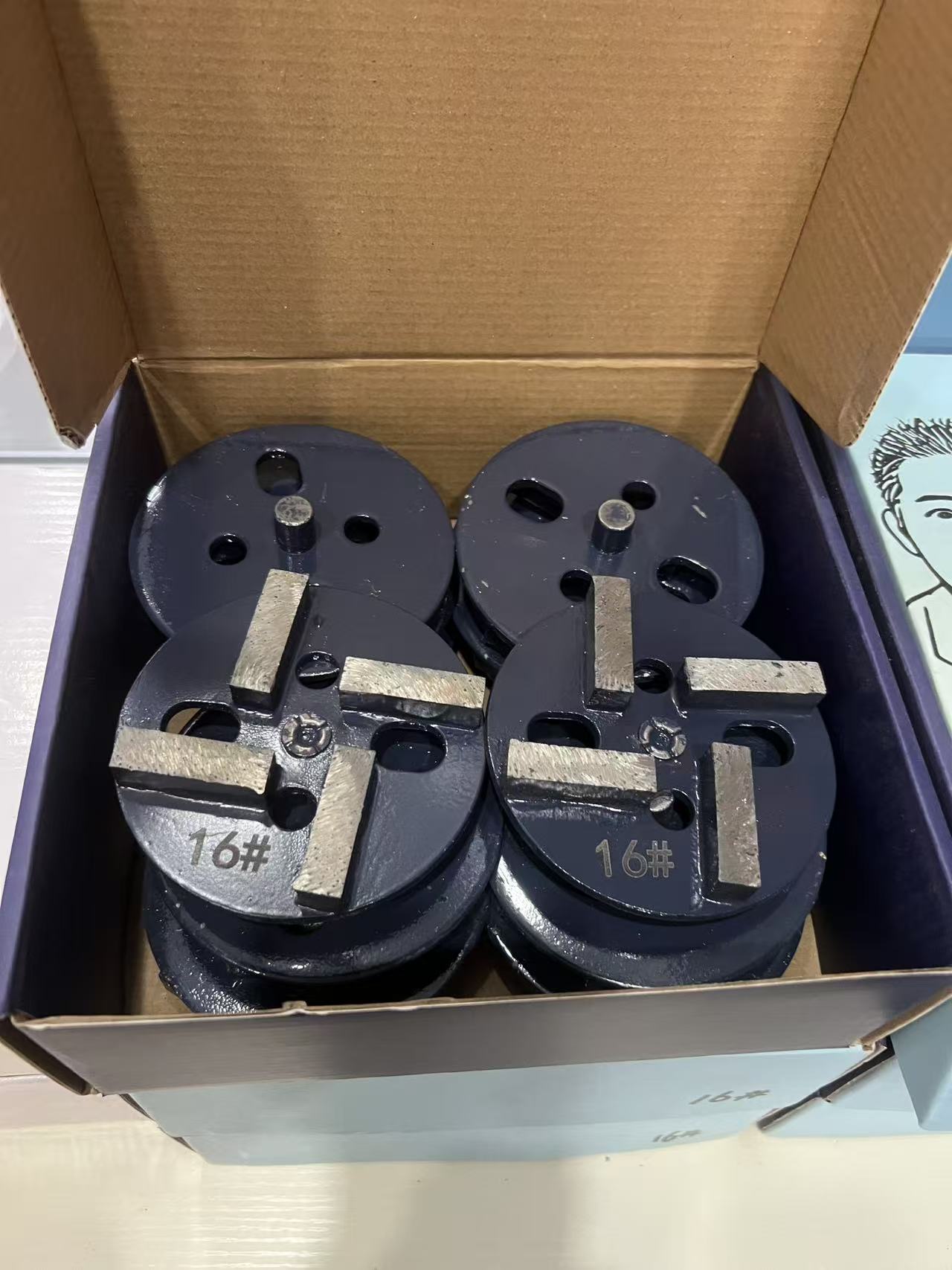
Are you in the concrete polishing, stone restoration, or floor contracting business? If so, you know that choosing the right floor grinder pads is critical to the success of your project.
Using the wrong pads can lead to slow progress, high costs, poor surface quality, and wasted time. The two most commonly used pads for floor grinders are resin pads and diamond pads.
But what’s the difference? And which one should you use for your specific application?
In this comprehensive guide, we break down the key differences, benefits, applications, and best use cases for resin pads vs. diamond pads. By the end, you’ll have a clear strategy to select the perfect pad for every job, optimizing efficiency and results.
Core Difference: Resin Pads vs. Diamond Pads
At their core, these two pads are designed for completely different stages of floor treatment.
- Resin Pads
Resin pads are made with a resin bond combined with diamond or silicon carbide abrasive. They are flexible and engineered for final finishing and polishing.
- Key Benefits:
◦ High-Gloss Finish: Delivers a smooth, shiny, mirror-like surface.
◦ Non-Damaging: Gentle on surfaces, minimizing scratches and burning.
◦ Versatility: Ideal for fine grinding and polishing on a variety of surfaces.
- Diamond Pads
Diamond pads feature high-concentration diamond segments bonded with a metal or ceramic matrix. They are extremely rigid and built for heavy-duty cutting and initial leveling.
- Key Benefits:
◦ Powerful Cutting: Removes material quickly, perfect for rough surfaces.
◦ Durability: Exceptionally long lifespan, reducing replacement costs.
◦ Rigid Performance: Excels at fixing uneven floors and removing tough coatings.
The Golden Rule: Use diamond pads for roughing and leveling, and resin pads for refining and polishing.
Quick Comparison Table
Feature Resin Pads Diamond Pads
Primary Use Fine grinding, polishing, finishing Coarse grinding, leveling, removal
Cutting Speed Slow (gentle) Fast (aggressive)
Final Surface High gloss, mirror finish Matte, smooth (requires further polishing)
Durability Shorter lifespan Extremely long-lasting
Best For Concrete, terrazzo, marble, tiles Hard concrete, old coatings, uneven floors
When to Use Resin Pads
Resin pads are your go-to for the final steps of any project where appearance matters.
- Achieving a high gloss shine on sealed and cured concrete.
- Restoring and polishing marble, terrazzo, and ceramic tiles.
- Light maintenance and polishing on flat, sound floors.
- Removing micro-scratches and enhancing the surface’s clarity.
When to Use Diamond Pads
Diamond pads are the workhorses for the starting phase of major projects.
- Initial grinding of new concrete to remove laitance and impurities.
- Removing old coatings like epoxy, paint, and urethane.
- Leveling severely uneven or rough concrete surfaces.
- High-production jobs where speed and material removal are critical.
Pro Tips for Maximum Efficiency
- Follow the Grit Sequence: Always progress from coarse to fine. Start with diamond pads (30# – 120#) for rough work, then switch to resin pads (200# – 3000#) for the final shine.
- Match the Pad to the Job: Never use resin pads for heavy cutting—they wear out rapidly. Never use diamond pads for final polishing—they leave unsightly scratches.
- Cooling is Key: Use water when using diamond pads for wet grinding to prevent overheating and extend pad life. Resin pads work well for dry polishing to avoid dust.
Conclusion
Selecting the right floor grinder pad boils down to understanding your project’s needs.
- For speed and power: Choose Diamond Pads.
- For clarity and a perfect finish: Choose Resin Pads.
By combining both pads in your workflow—diamond for the heavy lifting, resin for the final touch—you’ll ensure every project is completed efficiently, cost-effectively, and to the highest standard.