
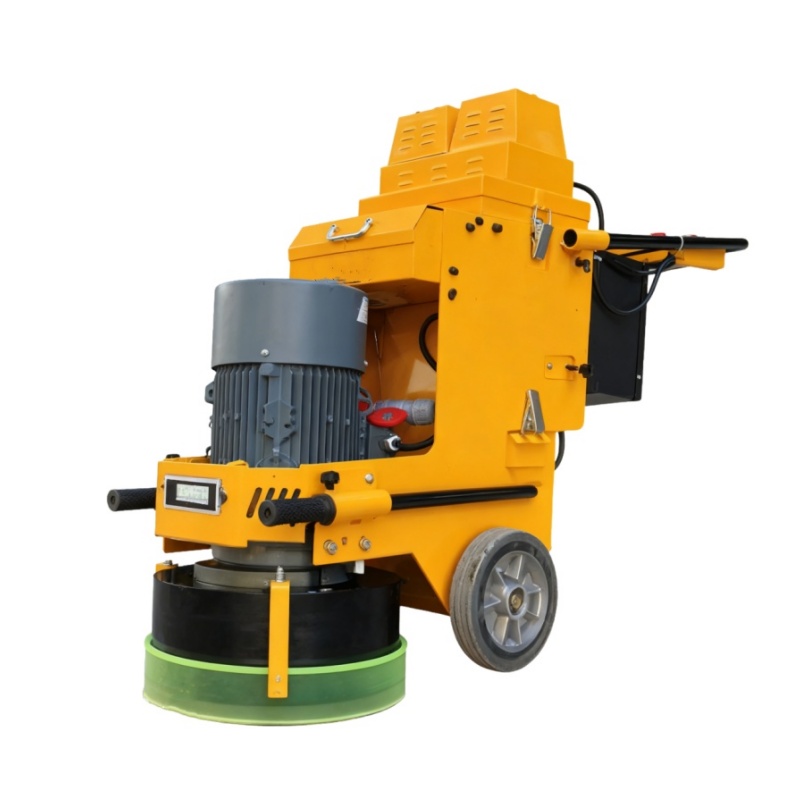
In concrete flooring, stone renovation, epoxy grinding, and polishing construction, the power of a floor grinder directly determines efficiency, removal rate, stability, and energy costs. Many users only focus on “the higher the power, the better,” but ignore model compatibility, working conditions, voltage matching, and transmission efficiency. This leads to situations like overloading a small machine or wasting power on a large one. Let’s break down the power logic clearly to help you choose the right model once and for all.
- Power Isn’t Everything: 3 Core Indicators You Need to Know
- Rated Main Motor Power: The consistent output power of the equipment, measured in kW. It’s the core indicator of grinding and cutting performance.
- Inverter Power: A common feature for heavy-duty models. It provides startup and overload buffering, usually ≥ the main motor power for smooth operation.
- Dust Collection Power: The matching dust removal power, typically ranging from 0.75–3kW. It directly affects dust-free construction quality.
In short: Main motor power is the priority, inverter ensures stability, and dust collection completes the setup.
- Quick Match: Power Ranges for Different Scenarios (2026 Popular Models)
1) Lightweight Handheld / Small Area: 1.5–3kW (220V)
Ideal for home decoration, small-area repairs, and epoxy base grinding. Lightweight and easy to operate, suitable for small construction sites. Not recommended for rough grinding on high-strength concrete.
2) Medium Walk-Behind / General Flooring: 3.5–7.5kW (380V)
The mainstream choice for garages, factories, and commercial flooring. Balances efficiency and energy consumption. Works well for both C30 concrete rough grinding and polishing.
3) Heavy-Duty /固化 / Large Area: 7.5–15kW (380V)
Equipped with 12 grinding heads and a 630–700mm working width. Designed for continuous operation and high removal rates. Perfect for cured flooring, old floor renovation, and steel fiber concrete surfaces.
4) Ultra-Heavy / Ride-On: 15kW and Above
Built for large warehouses, municipal engineering, and high-intensity continuous construction. Sufficient power reserve ensures stable output for 12-hour full-load operation.
- How Power Impacts Construction: Efficiency, Removal Rate, and Lifespan
- Removal Rate: Power directly determines the grinding thickness per minute. Rough grinding and old floor removal rely heavily on high power.
- Stability: Insufficient power causes machine jolting, deviation, and uneven grinding marks. Proper power ensures smooth walking and flat flooring.
- Durability: Long-term low-power overheating leads to coil burnout and reduced lifespan. Sticking to the reasonable power range saves maintenance costs.
- Energy Consumption: Blindly pursuing high power equals wasted electricity. Choosing power based on area and hardness delivers the best total cost of ownership (TCO).
- 5 Key Tips to Avoid Selection Mistakes
- Check Voltage: 220V is limited to models under 3kW. For power above 3.5kW, prioritize 380V three-phase for stable power output.
- Consider Weight and Transmission: A lightweight body with high power causes vibration. A heavy-duty machine with gear transmission can fully utilize high power.
- Match Working Conditions: Rough grinding/old floors/high-strength concrete → select a power level higher than standard. Polishing/stone surfaces → can lower the power.
- Inverter Requirement: Heavy-duty models are recommended to match an inverter for smooth startup and motor protection.
- Complete Accessories: Dust collection, water tanks, and grinding discs must be upgraded simultaneously. Otherwise, even high power won’t achieve optimal results.
- Summary: One Sentence Selection Rule
- Small-area repairs: 2–3kW (220V)
- General flooring: 5.5–7.5kW (380V)
- Cured/heavy-duty/large areas: 11–15kW (380V)
- Ultra-large continuous construction: Ride-On models ≥15kW
The core of a floor grinder isn’t “maximizing power” but the four-in-one integration of power, body, working conditions, and voltage. Choosing the right power boosts efficiency, reduces failures, and lowers overall costs.