
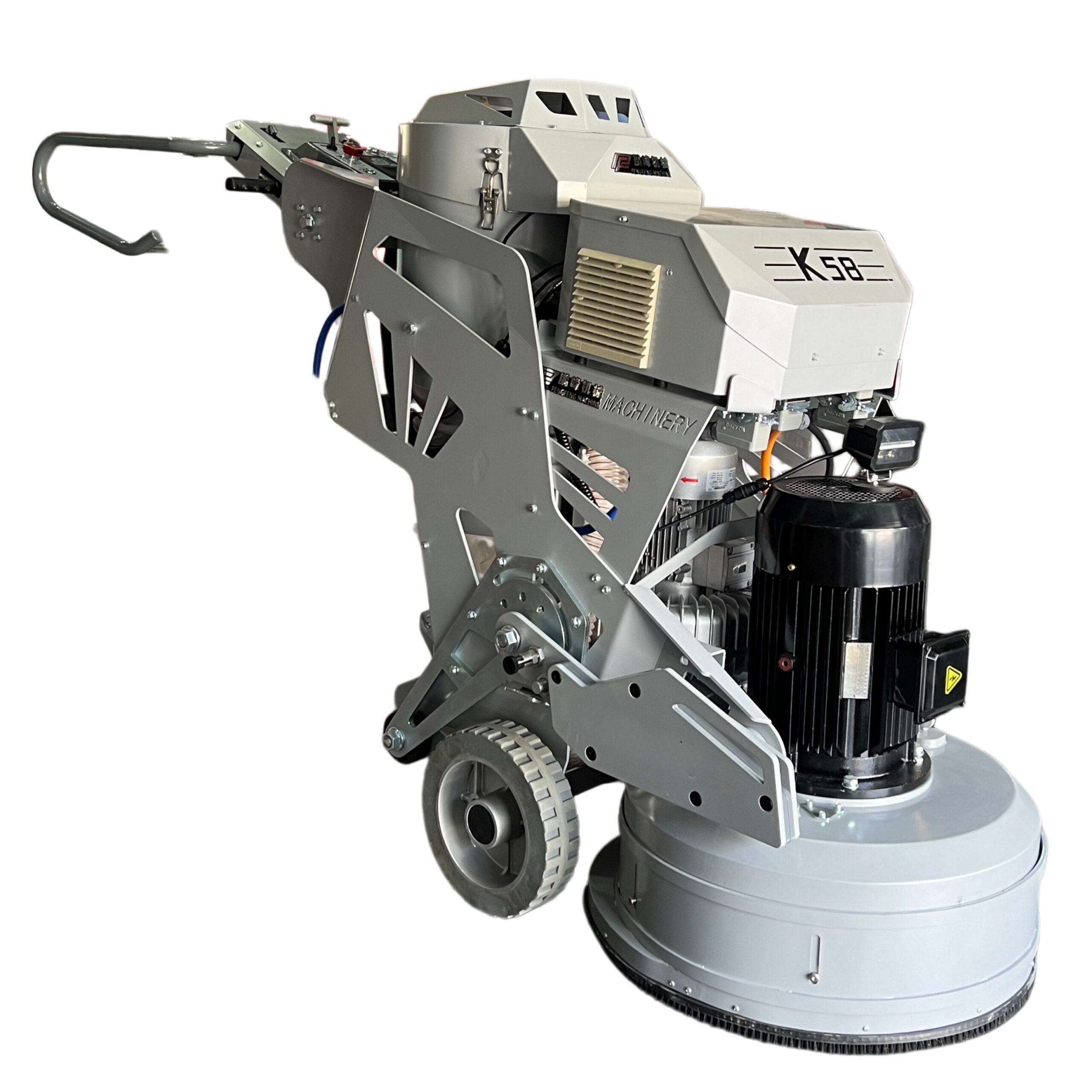
In modern floor construction, floor renovation, and industrial ground leveling projects, ground grinding machines have evolved from auxiliary equipment to core construction tools, completely changing the traditional inefficient, high-dust, and low-precision construction model. Whether it’s a commercial shopping mall, industrial workshop, garage, or residential ground renovation, choosing a suitable ground grinding machine directly determines construction efficiency, ground quality, and overall project cost. This article will comprehensively analyze the application advantages, core types, construction tips, and maintenance essentials of ground grinding machines to help you make the best choice for your project.
Common Pain Points of Traditional Ground Construction & How Grinding Machines Solve Them
Traditional ground treatment mostly relies on manual polishing and simple mechanical grinding, which is difficult to meet the current construction standards and has long plagued construction teams. The emergence of professional ground grinding machines has perfectly solved these industry pain points:
- Low construction efficiency: Manual grinding takes a lot of time, and large-area construction cannot be completed on schedule. Ground grinding machines adopt high-power motors and wide grinding discs, and the single construction area is greatly increased, which can shorten the construction period by more than 60% compared with traditional methods.
- Serious dust pollution: Uncontrolled dust during construction not only endangers the health of workers but also causes environmental pollution. Most modern grinding machines are equipped with a built-in dust removal interface or an integrated dust removal system, realizing dust-free or low-dust construction, complying with occupational health and environmental protection regulations.
- Uneven ground flatness: Manual operation is prone to uneven ground, which affects subsequent floor laying, epoxy construction, and use. The precision grinding design of professional grinding machines ensures the flatness and smoothness of the ground, and the error is controlled within an extremely small range.
- High labor cost: Traditional construction requires multiple workers to cooperate, and the labor cost remains high. The operation of ground grinding machines is simple and labor-saving, and single-person operation can be realized, greatly reducing labor input.
Main Types of Ground Grinding Machines & Applicable Scenarios
Different ground conditions and project scales require matching types of ground grinding machines, and choosing the right model can maximize construction benefits:
- Hand-Pushed Small Ground Grinding Machines
Lightweight and flexible, easy to move and operate, suitable for small-area ground construction such as home floors, small shops, and local ground repair. It is mainly used for fine grinding, polishing, and removing surface floating cement, with low power and convenient operation, which is the first choice for small and medium-sized maintenance projects.
- Walk-Behind Medium-Sized Ground Grinding Machines
With moderate power and grinding width, it is suitable for medium-area construction such as office buildings, small garages, and factory workshops. It has strong grinding force, can handle rough ground, remove paint, epoxy residue, and level uneven ground, with balanced efficiency and flexibility.
- Ride-On Large Ground Grinding Machines
High-power, large-width grinding design, for large-scale industrial ground, large garages, shopping malls, and airport ground and other super-large area projects. It has high construction efficiency, stable operation, long continuous working time, and can meet the needs of large-scale rapid construction, which is the preferred equipment for large engineering projects.
Key Application Fields of Ground Grinding Machines
- Industrial Floor Treatment: For factory workshops, warehouse floors, etc., grind and level the cement ground, remove surface impurities, and lay a foundation for epoxy floor, wear-resistant floor construction.
- Commercial Floor Renovation: For shopping malls, hotels, office buildings, etc., renovate old floors, remove damaged floor layers, and restore ground flatness and aesthetics.
- Garage Ground Construction: Level and polish the garage cement ground, improve ground wear resistance and flatness, and facilitate subsequent traffic line painting and floor laying.
- Concrete Ground Maintenance: For newly poured concrete ground, remove laitance, polish and cure, enhance the strength and aesthetics of the ground.
- Floor Surface Polishing: For terrazzo, marble, and other ground surfaces, carry out fine polishing to restore the glossy texture of the ground.
Purchasing & Maintenance Tips for Ground Grinding Machines
Purchasing Essentials
- Clarify project scale and ground type: Choose small, medium, or large models according to the construction area; select different grinding discs for cement, epoxy, terrazzo and other grounds.
- Focus on motor performance: Give priority to high-power, pure copper motors, which have stable operation, strong durability, and are suitable for long-term continuous work.
- Check dust removal function: Give priority to models with built-in dust removal or compatible with external dust collectors to ensure low-dust construction.
- Consider after-sales and accessories: Choose products with complete accessories and perfect after-sales service to facilitate later maintenance and parts replacement.
Daily Maintenance Tips
- After each construction, clean the grinding disc, dust collection box, and fuselage in time to avoid cement residue solidification and affecting the next use.
- Regularly check the wear of the grinding disc, and replace it in time when it is seriously worn to ensure grinding effect.
- Lubricate the moving parts regularly to reduce mechanical wear and extend the service life of the equipment.
- Store the equipment in a dry and ventilated environment to avoid moisture damage to the motor and electrical components.
Conclusion
As an essential equipment in modern ground construction, ground grinding machines have greatly improved the efficiency and quality of floor treatment projects with their efficient, environmentally friendly and precise advantages. For construction teams, decoration companies, and engineering contractors, choosing a professional and suitable ground grinding machine is not only an improvement of construction efficiency, but also a guarantee of project quality. In the increasingly high standard of ground construction, investing in high-quality ground grinding equipment will bring longer-term benefits and competitive advantages to the project.
If you have any questions about model selection, construction operation, or equipment maintenance of ground grinding machines, welcome to leave a message for consultation, and we will provide you with professional solutions!