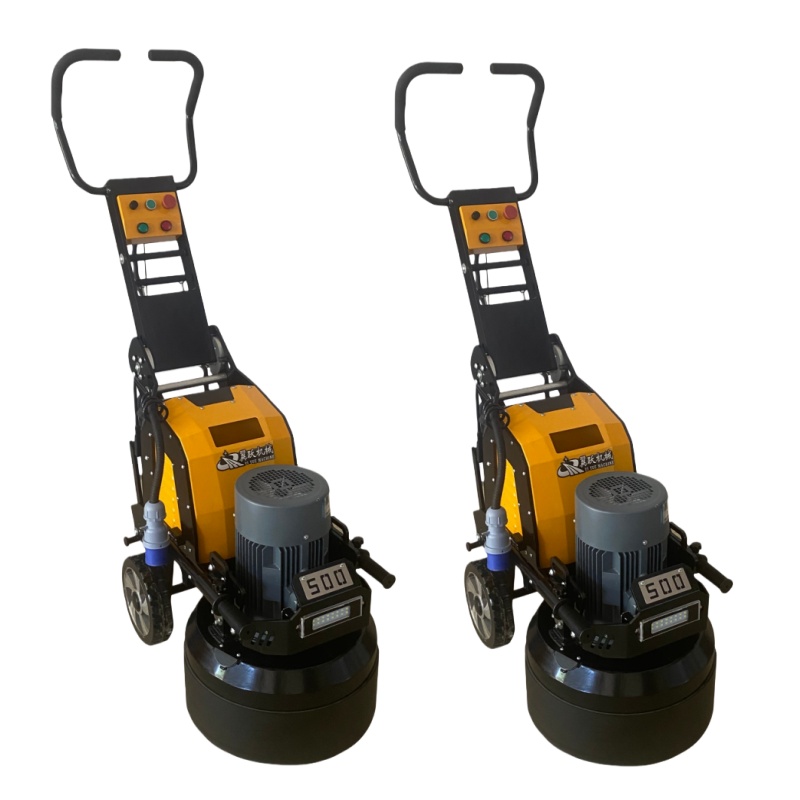
In 2026, construction and flooring projects have entered a new era of intelligent building and green construction. From factory workshops and underground parking garages to commercial complexes and old community renovations, floor grinders have evolved from basic grinding tools into core equipment integrating AI autonomous operation, dust-free environmental protection, heavy-duty efficiency, and precise quality control. They comprehensively solve pain points of traditional construction such as heavy dust, low efficiency, unstable quality, and high labor costs.
From Manual to Intelligent: Flooring Construction Enters the Unmanned Era
The new generation of floor grinders is equipped with lidar + visual dual navigation, AI path planning, and automatic obstacle avoidance systems, enabling autonomous mapping, uniform grinding, and no missing or repeated grinding. They support 24-hour continuous operation.
With one-button start, operators can remotely monitor multiple machines at once, reducing labor allocation by more than 60%. Daily construction area exceeds 2,000 ㎡, improving efficiency by 3–5 times compared with traditional methods.
The device integrates intelligent pressure adjustment, grinding pad status monitoring, and automatic fault alarm. Construction flatness is controlled within 0.3 mm, greatly improving quality consistency and providing a stable base for epoxy flooring, hardened flooring, emery flooring, and stone renovation.
Dust-Free & Low-Noise: Green Construction Becomes Standard
Facing stricter environmental controls on construction sites, mainstream models are equipped with high-power dual vacuum systems, achieving a dust removal rate of over 95% and reducing dust concentration below 5 mg/m³, eliminating heavy dust.
Inverter motors and noise-reduction design keep operating noise below 75dB(A), meeting construction requirements for sensitive areas such as shopping malls, hospitals, schools, and residential areas.
Meanwhile, the equipment adopts energy-saving drive and modular design, reducing energy consumption by 25%–30%, extending motor life by 30%, and simplifying maintenance. Lower full-life-cycle costs align with green building and LEED certification requirements.
All-in-One Machine: Covers Full-Scene Floor Treatment
The new generation floor grinder supports wet & dry use, wide heavy-duty grinding, and fine polishing. By quickly changing grinding pads, it can complete:
- Concrete base leveling and laitance removal
- Removal and renovation of old epoxy, paint, and mortar layers
- Polishing and brightening for hardened floors, terrazzo, and stone
- High-efficiency treatment for large areas such as garages, factories, airports, and municipal roads
It flexibly adapts to both small shop renovations and large-scale projects such as heavy-duty workshops and logistics centers, greatly reducing equipment investment.
Industry Trends: Efficiency, Intelligence, and Reliability Become Core Competitiveness
Currently, flooring projects are transforming toward shorter schedules, higher standards, and lower costs. Floor grinders show three major trends:
- Heavy-duty performance: Dual motors / high-power drive for high-strength concrete and continuous heavy-duty work.
- Intelligence: Data management, remote operation, and unmanned work become standard features.
- Integration: Grinding + vacuum + cable management integrated design, reducing auxiliary equipment and improving site efficiency.
Tests from construction companies show that after using intelligent floor grinders, overall construction costs are reduced by about 30%, construction periods shortened by 40%–50%, and rework rates greatly decreased, significantly improving project delivery and profitability.
Conclusion
The iteration of floor grinders reflects the intellectualization and greening of construction equipment.
The new generation of equipment, focusing on high efficiency, dust-free, intelligence, and durability, is redefining flooring construction standards and becoming key equipment for construction enterprises to improve quality, efficiency, and market competitiveness.
In the future, with the continuous penetration of AI and automation technology, floor grinding will become safer, smarter, and more economical, injecting sustained power into infrastructure and urban renewal.