
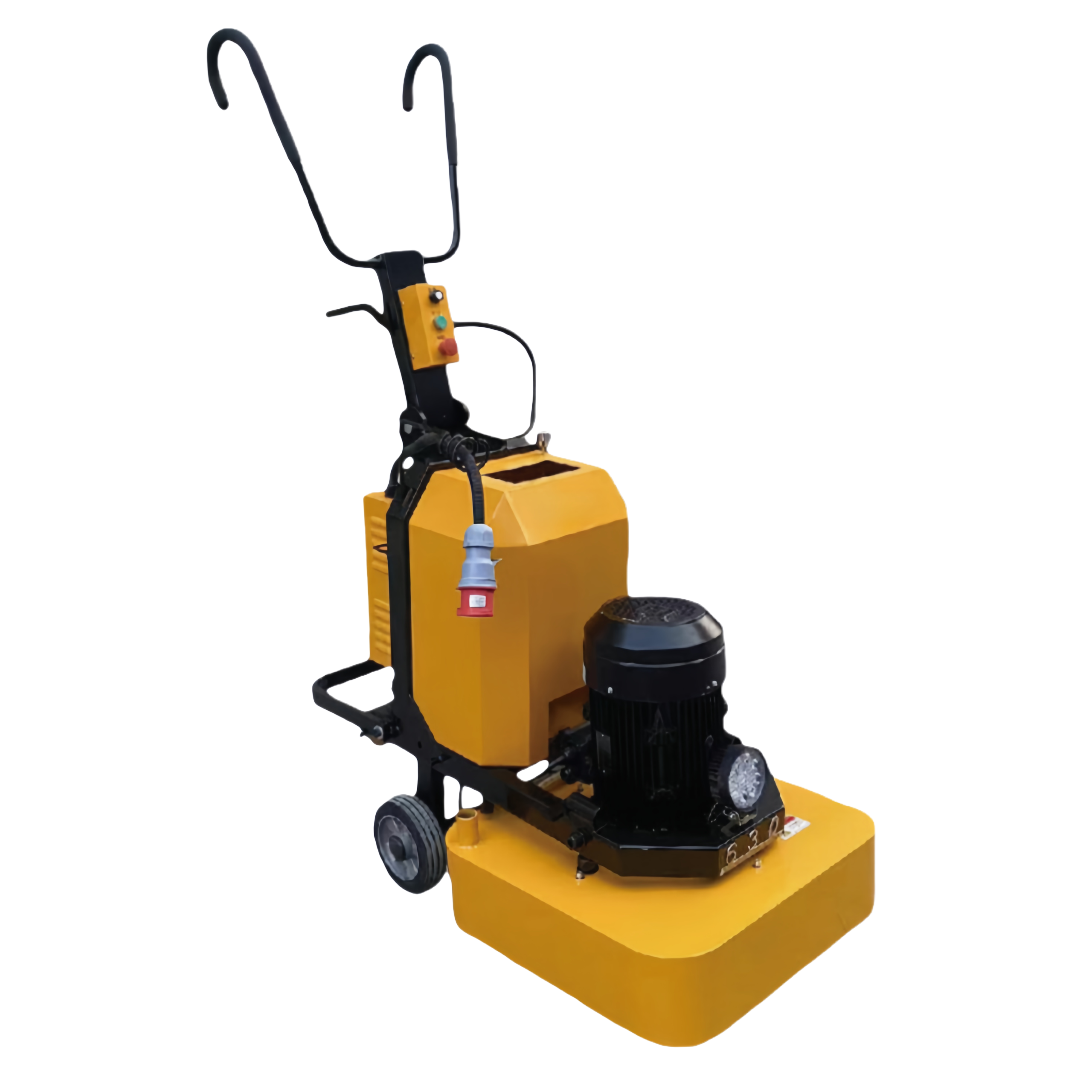
In the rapid upgrading of infrastructure including industrial plants, commercial complexes, underground parking lots, airports, and rail transit systems, surface treatment has evolved from simple leveling to standardized construction featuring high precision, high efficiency, and environmental protection. As core equipment for flooring projects, floor grinders are driving industry upgrades through technological innovation, becoming essential tools for modern construction and old floor renovation.
From Manual to Intelligent: Core Advantages of Modern Floor Grinders
Traditional manual grinding suffers from low efficiency, poor flatness, heavy dust pollution, high labor costs, and long construction cycles. The new generation of floor grinders is equipped with electric drive, planetary discs, self-propelled systems, intelligent control, and integrated dust extraction, completely transforming construction methods:
- Base Preparation: Quickly removes concrete laitance, old coatings, epoxy, and oil stains, providing a clean and solid foundation for curing agents, epoxy, and wear-resistant floors.
- Leveling & Polishing: Covers from coarse grinding to fine polishing, achieving flatness ≤ 2mm/m and mirror-like surface finish.
- Old Floor Renovation: No heavy demolition required, directly repairing and renewing floors, greatly reducing time and cost.
Suitable for concrete, terrazzo, marble, emery, and many other floor types, covering both new construction and renovation projects.
2026 Tech Trends: Intelligence & Green Construction Become Mainstream
The industry is accelerating toward higher efficiency, smarter control, and greater sustainability:
- Dual-motor / Heavy-duty Design: Stable pressure and stronger cutting force, improving efficiency by over 40% in large-area construction.
- Planetary Grinding Heads: Uniform grinding without dead ends, avoiding uneven surfaces and ensuring stable quality.
- Wireless Remote Control & Smart Navigation: Single-person operation for open areas, improving safety and reducing labor intensity.
- Full-chain Environmental Protection: Standard dry dust collection systems, meeting indoor environmental and construction requirements.
- Quick-change Tools & Adjustable Speed: Shorten downtime and adapt to different materials and grit requirements.
Electric and self-propelled grinders are increasingly popular in industrial and commercial projects, shifting the industry from labor-intensive to equipment-driven.
Typical Application Scenarios
- Industrial Flooring: Factories, warehouses, logistics centers requiring durability, pressure resistance, and easy cleaning.
- Commercial Spaces: Shopping malls, exhibition halls, office buildings needing high flatness and aesthetic finish.
- Transportation Hubs: Parking garages, airports, subway stations with high traffic and load-bearing demands.
- Renovation Projects: Upgrading old plants and shopping centers at lower cost and shorter timelines.
- Stone Maintenance: Refinishing terrazzo and stone floors to extend service life.
Selection & Operation Tips
When choosing a floor grinder, focus on power, grinding pressure, working width, mobility, dust control, and ease of use. Small machines for corners and small areas; heavy-duty self-propelled units for large-scale, high-intensity projects.
Follow the process: coarse grinding → medium grinding → fine grinding → polishing, with appropriate abrasive pads and dust extraction for quality and safety.
Industry Outlook
Supported by green construction and intelligent building policies, floor grinders will continue to develop toward automation, lightweight, low noise, and long battery life. Replacing labor with equipment and experience with standards improves efficiency, reduces costs, and extends floor lifespan.
Whether for new projects or renovations, professional floor grinders are key to improving competitiveness and ensuring high-quality results. Choosing the right machine and standard process ensures every floor is flat, durable, and attractive.