
In ground engineering for industrial plants, underground garages, commercial spaces and other venues, sanding is the most common quality hazard after grinding construction—surface dust shedding and loose sand grains not only affect the aesthetic appearance and service life of the floor, but also may cause safety accidents. Recently, with the strict implementation of the Code for Construction Quality Acceptance of Building Ground Engineering, how to eliminate sanding after floor grinding through scientific construction has become a core issue of industry concern. Combining frontline construction cases and technical specifications, this article disassembles a full-process solution from material selection to process control.
I. Root Causes of Sanding: Accurate Positioning of Three Core Triggers
Floor sanding is not accidental; it is essentially structural looseness caused by insufficient strength of the concrete base, out-of-control construction processes or improper material adaptation. According to industry testing data, more than 80% of sanding problems stem from three core triggers:
- Material aspect: Cement grade lower than P·O42.5, excessive mud content in sand and gravel (>2%) or unbalanced water-cement ratio (>0.45), leading to inherent insufficient strength of the concrete base;
- Construction aspect: Premature grinding timing (concrete age <28 days), wrong grinding disc selection or out-of-control grinding pressure, damaging the surface structure;
- Curing aspect: No sealed curing treatment after grinding, or insufficient curing time (less than 7 days), leading to rapid loss of surface moisture and loose structure.
In the renovation project of an industrial plant in Beichen, Tianjin, a large area of mild sanding occurred after grinding due to the failure to control the water-cement ratio (reaching 0.52) in the early stage, and it only returned to the standard after treatment with a penetrating curing agent. This case confirms the importance of source control.
II. Pre-Control: Key Points of Material and Equipment Selection
To achieve sand-free grinding, the first line of defense must be established from the construction preparation stage, with the core lying in the scientific adaptation of materials and equipment:
Material Selection Standards
- The base concrete shall reach a strength of C25 or above, preferably P·O42.5 ordinary Portland cement, and the fineness modulus of sand and gravel shall be controlled at 2.6-2.9;
- Lithium silicate-based curing agents (solid content ≥20%) are the first choice for sealed curing agents, with a penetration depth of 3-8mm, which can react with free calcium ions in concrete to generate calcium silicate gel and significantly improve hardness;
- Repair materials shall match the degree of sanding: epoxy putty for mild sanding, high-strength polymer repair mortar (bond strength ≥2.5MPa) for moderate sanding, and concrete with a strength of C30 or above for reconstruction in case of severe sanding.
Equipment Configuration Requirements
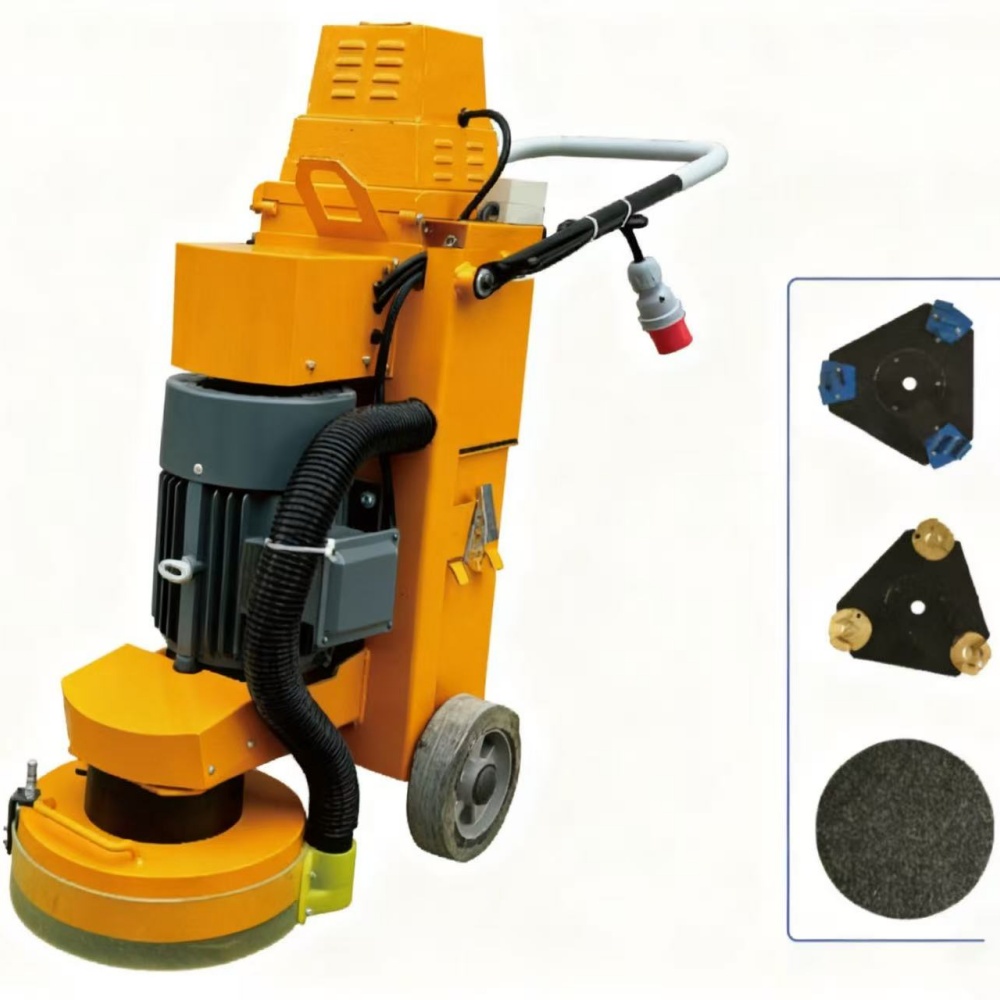
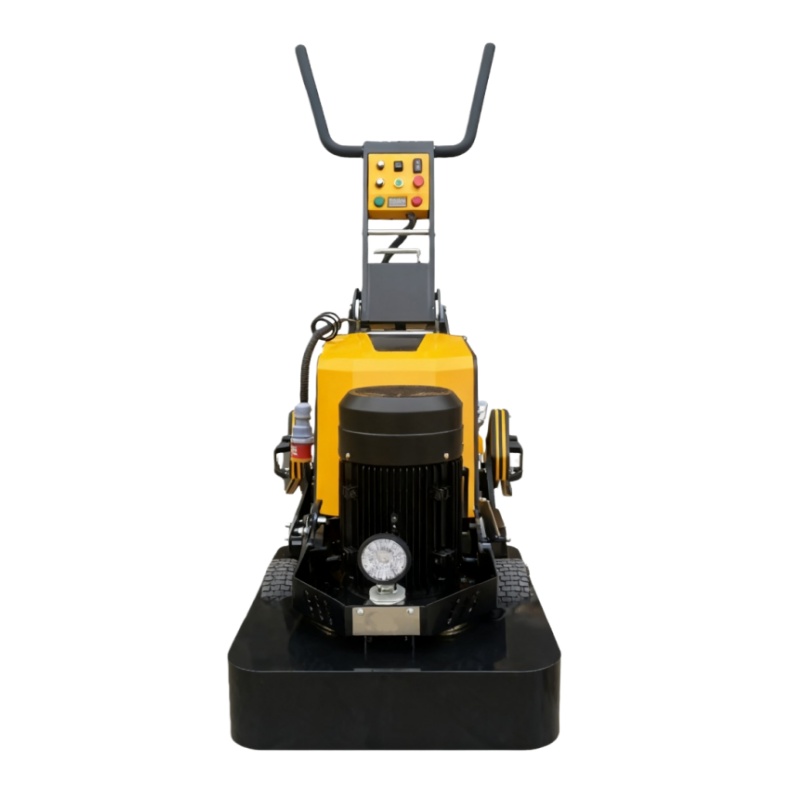
- The grinding machine shall have a power of ≥7.5kW, a grinding disc diameter of 500mm, and be equipped with full-specification diamond grinding discs and resin grinding discs from 50 to 3000 mesh to meet the needs of all stages of rough grinding, medium grinding and fine grinding;
- The supporting industrial vacuum cleaner shall have a suction power of ≥20kPa to ensure instant dust removal during grinding and avoid secondary pollution of the base;
- Auxiliary equipment includes laser leveler (accuracy ±2mm/3m) and moisture content tester to accurately control construction parameters.
III. Process Core: Four-Step Grinding Method + Curing Closed Loop
A scientific construction process is the key to avoiding sanding. The industry-proven “four-step grinding + curing” process has been verified effective in many projects across the country:
- Base Pre-Treatment: Defect Repair First
A comprehensive inspection of the floor shall be conducted before grinding. Cracks shall be repaired with epoxy mortar (low-pressure grouting is required for widths >0.5mm), hollow areas shall be chiseled and filled with high-strength mortar in layers, and oil-contaminated areas shall be thoroughly removed with industrial degreaser to ensure a solid, clean and non-loose base. At the same time, test the moisture content of the base, which shall be ≤8% before entering the grinding process.
- Graded Grinding: Gradient Treatment from Rough to Fine Grinding
- Rough grinding (50-200 mesh): Use a grinding machine with a counterweight of 30-40kg to grind in a grid pattern at a speed of 1.5-2m/min to remove surface laitance and loose parts and expose fresh aggregate. Clean the grinding disc residue every 500 ㎡;
- Medium grinding (400-800 mesh): Replace with resin grinding discs, reduce the counterweight to 25kg, and perform cross grinding in a spiral path to eliminate rough grinding scratches and ensure the surface roughness reaches Rz50-80μm;
- Fine grinding (1500-3000 mesh): Dry grinding process with synchronous operation of a vacuum cleaner, control the speed at 2-2.5m/min, and process the edge and corner areas with a hand-held angle grinder with special-shaped grinding heads to avoid missing grinding.
- Curing Treatment: Penetrating Materials Lock the Structure
Spray lithium-based curing agent immediately after fine grinding, control the dosage at 0.3-0.5kg/㎡, keep the floor moist for 40-60 minutes to ensure the material fully penetrates more than 3mm into the base. After the surface is dry, polish with a 500-mesh grinding disc to promote the formation of calcium silicate gel, increase the Mohs hardness of the floor to 6-7 grades, and enhance wear resistance by 3-5 times.
- Curing and Finishing: 72-Hour Closed-Loop Protection
No personnel walking is allowed within 24 hours after curing, and heavy object rolling is avoided within 72 hours. During this period, keep the ambient temperature at 5-35℃ and ventilate twice per hour. The final acceptance shall meet three standards: the surface flatness deviation ≤2mm/2m, the rebound strength ≥C30, and no sand grain shedding.
IV. Industry Case: Sand-Free Practice in a 12,000 ㎡ Workshop
In the 12,000 ㎡ production workshop floor renovation project of an industrial park, the construction team strictly followed the above standards: selected P·O42.5 cement and lithium-based curing agent, adopted the three-stage process of “50-mesh rough grinding – 400-mesh medium grinding – 3000-mesh fine grinding”, and matched with an industrial vacuum cleaner for full-process dust removal. After construction, testing showed that the floor compressive strength reached 35MPa, the wear resistance was increased by 4 times, and no sanding or dust problems occurred after one year of use, fully meeting the traffic requirements of heavy equipment in the workshop.
Conclusion: Technology Empowers Quality, Details Determine Success
The core of sand-free floor grinding lies in the full-chain management of “source control + precise process + curing closed loop”. From the control of water-cement ratio during material selection, to the gradient matching of grinding discs in the grinding process, and then to the curing protection after solidification, the refined operation of each link is the key to avoiding sanding. With the continuous upgrading of industry technology, the combination of penetrating curing agents and intelligent grinding equipment will further reduce the risk of sanding and provide a more long-term quality guarantee for ground engineering.