In modern concrete flooring construction, the power trowel has become essential equipment for improving floor quality, shortening construction periods, and reducing labor costs. Whether for factories, warehouses, parking lots, residential roads, or commercial floors, a reliable power trowel quickly delivers smooth, glossy, and wear-resistant finished surfaces.
What Is a Concrete Power Trowel
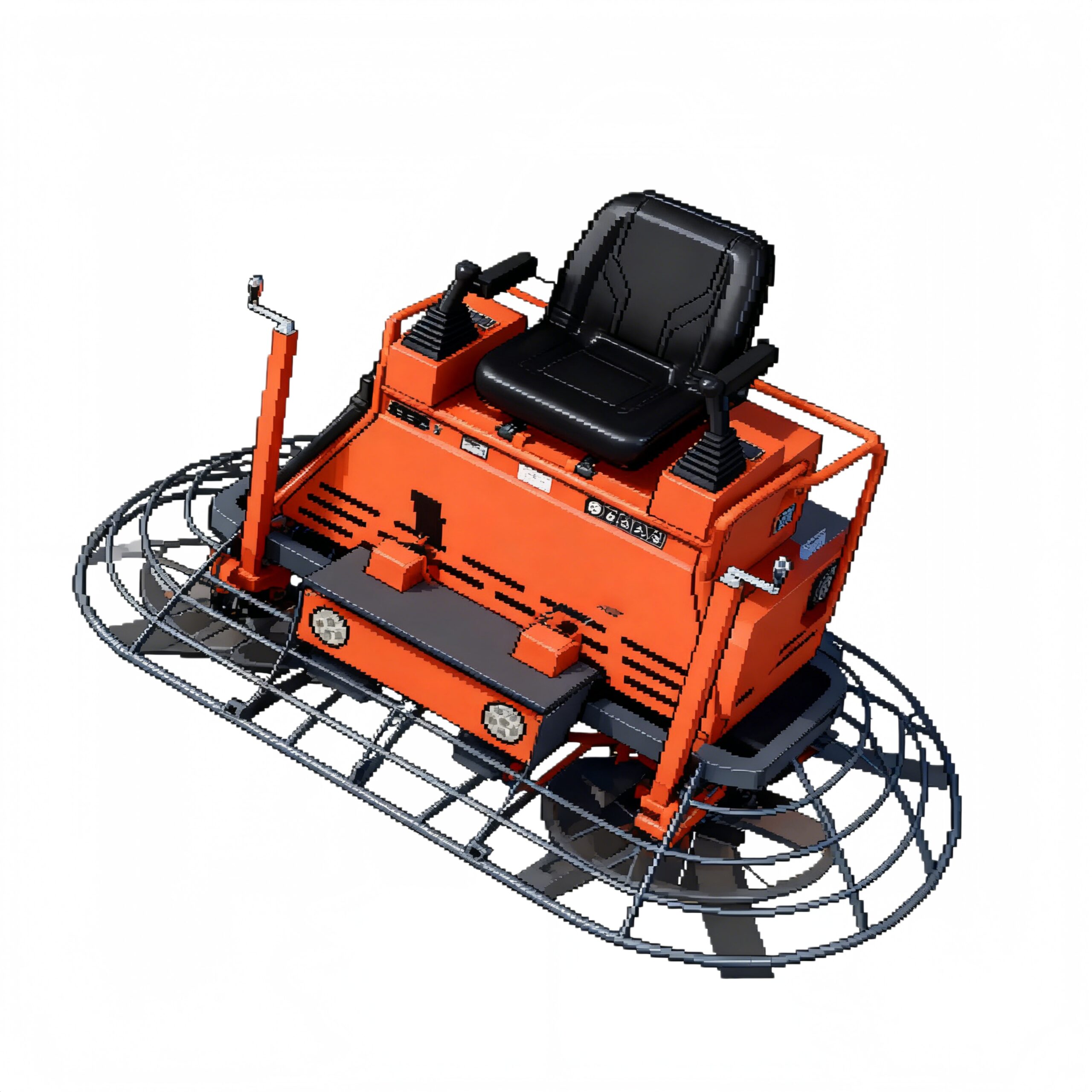
Also known as a concrete finisher or troweling machine, a power trowel uses an electric or gasoline engine to rotate trowel blades, performing troweling, floating, and finishing on initial-set concrete. It greatly improves surface density and wear resistance, prevents dusting and cracking, and achieves much higher flatness than manual work.
Key Advantages of Power Trowels
- Higher Efficiency: Far faster than manual finishing, ideal for large areas
- Better Floor Quality: Uniform compaction reduces hollowness, dusting, and pitting
- Labor Saving: Lowers physical intensity and reduces reliance on skilled workers
- Durable & Easy Maintenance: Sturdy structure, wear-resistant blades, simple upkeep
Main Types & Applications
- Walk-behind Power Trowel: Light and maneuverable, suitable for indoor, small-area, and corner work
- Ride-on Power Trowel: Dual-plate, high-efficiency model for large projects like factories and parking lots
- Electric / Gasoline: Electric models are clean for indoor use; gasoline models offer strong power for outdoor sites
Operation & Maintenance Tips
- Work during the initial set phase — too early causes bleeding, too late makes finishing difficult
- First float for leveling, then finish for polishing
- Regularly check blades, belts, and engine oil
- Follow safety procedures and wear protective gear
Conclusion
A great floor starts with proper finishing. The power trowel is a key investment in construction quality and efficiency. Choosing the right machine, using it correctly, and maintaining it well will help you achieve high-standard floors while cutting costs.